Monday, 13 August 2018

e-AsTTle workshop 14.8.18

Cluster Toolkit Info site 

Toolkit session:
Here's a link to help you gain some info before arriving or there to use in our session. We are in Studio Tangaroa(far right end) Rawhiti School. 
Drinks: 3:30pm Start 4:00pm-to 5:00pm

Use this link to refer to for help.

http://easttlehelp.vln.school.nz/


Notes:
E-asTTle is for learning not of. It is not designed for pre and post tests. It is to help group and take them to the next steps. It helps to guide your teaching and so the teachers can see through the eyes of the students.

Students get self-efficacy and they can see they that are improving. The cut score shows how far they have moved on the continuum. You have to understand what big gains are and what they means for the child. Whether the test is too easy, they have achieved highly in one area etc.

The link here can tell you the answer to any question. How test can be adapted for an adaptive test, can customize tests, compare test etc.

Testing:
When you test, you need to give a multi level test. It will break down B, P, A (Beginning, proficient and advance) and the Level into percentages to advice where the child is at accurately.
In writing you don't get any choice of levels.
Writing is a cold test-there is no warm up. 4-5 min to discuss. If you write things on the board in discussion make sure you rub it off prior to starting the test. 40 min to do the test. You can set the purpose of the test, e.g. recount, persuasion etc. From their you can choose the writing prompt/theme.
If it is a photo print it in colour, laminate for the kids to use and put it up on the projector. Black and white photo copy is unacceptable. You want the children to do the best writing as you can. Prompts need to be colour and clear.
When using voice to text for non writers...When you're going through the writing you have to say to yourself is this B, P, A? What level is he at?

Marking:
Different genres have an extra marking guide for surface features.
There are certain things that will move them up a Level. e.g Oraganisation the one thing to move a child from R3 to R4 is a missing line indicating paragraphs.
If you look at the class you will be able to identify next steps. E.g if they are not doing paragraphs well you can do 6 weeks on paragraphs then re-test.
The modelled writing and feedback when marking with children, is when children will learn these skills. Self efficacy will pick up when they start to make gains and from feedback.
CSV sheets: copy and paste from e-asTTle into a google spreadsheet.
Check the cut scores. If the child is staying within the same level you need to check how far within that level they have moved. If they have not moved much this needs to be looked at. Check the average and the mean also.
Individual Learning and Pathway interpretation guide
The blue part in the "gas tank" looking graph shows the National Average and the line is where they are at. These sheets give you a run down on each child. It has there overall score and each of the seven areas broken down. The graphs give the child's range which allows for good and bad days. You can compare to the National average also. You can see the strengths and what the child has achieved, to be achieved and gaps. You can see straight away next steps and what to teach next. All "ticks" are weighted differently e.g. one thing right doe not equal one point.
Find this- view reports-select child or group-"learning pathways report"

What this means for me?
I did not know that you could go in and make such specific graphs to guide teaching and learning. I will have to go and see how my class did from our last assessment in Term 2. From this I will be able to see what the overall next steps for the kids in my class are. This will be a great addition to guiding assessment in my writing and making sure I am meeting my children's learning needs to the best of my ability. This may be of more benefit the next time we do this assessment as the previous assessment was 6-7 weeks ago and there would have been some movement.

Monday, 30 July 2018

Manaiakalani PLD 31.7.18

Connected Learners Share!!

Mark Maddren (Lead Facilitator - Manaiakalani Outreach) came in to give us PLD on technology. We were to choose two tasks to do from the following link. We want to teach children about having positive relationships online. Social media has become a major influence on young children and we need to get in first and teach them about how to be safe and use technology well.

https://sites.google.com/core-ed.ac.nz/connectedlearnersshare/home

The Acceleration of Sharing


Sharing Empowered -I had to place where the technology and online apps fit on a timeline.
Answers Sharing Empowered- this was the answers. Which I was not too far off.


Reflection Questions:
How has sharing changed in your lifetime? -It has changed hugely. It has all of a sudden taken off and everyone is saturated in it. Things are instant and people can see what you have been up to straight away. There is little privacy and children these days don't understand that things used to take time and that their actions online will be there forever. To share photos in the past you had to take photos, get the film developed, wait a couple of days then go to see them to physically share the photo. These days with the click of a button things can be seen across the world. I have been able to experience that change. And while I find it great to share things with family overseas I also see the need to bare in mind that people I don't want to see it may see it, e.g. parents from school, students, strangers among other people. Checking privacy settings and being wary have become more and more at the forefront of my mind.
In your role in your learning area how has the increased sharing opportunities enhanced your teaching practise? I don't feel this has affected my sharing opportunities yet. I am ensuring I have things on my personal blog about my PLD and I make sure I am sharing children's learning on the Facebook page however this is something I need to incorporate into the children's learning further. I have thought about using ipads for writing to be able to easily share the children's work and this is something I need to trial.
What new learning, resources or support could your Manaiakalani Outreach Facilitator provide? An app to make blogging easier. Currently there is a lot of sending things to myself from my phone to laptop to then create posts and share photos.


Stories of Practice

Using class blogging to build powerful connections across our clusters.
-we want to creat an authentic audience for our learners
-create opportunities for qualitty commenting on each others learning in a positive ways.
-connect with learners around NZ
-use as silent reading opportunities (older children)
-to engage and motivate Literacy
-Provide a framework that is supportive to keep the blogs up to date.
-promote Learn, Create, Share with learning


Explore one blog post - What was the purpose of the post? The Post I am looking at
-The purpose of this post was to share thoughts and feelings and bring attention to the turtles suffering due to plastic bags. To educate and encourage others to not use plastic bags and plastic.
My comment on the blog post, using Positive Thoughtful Helpful sentence starters: I like you also see the struggle for turtles and other sea life and feel sad. Thank you for bringing this to other's attention. I would hope that from your post that others will think about their use of plastic and aim to use reusable items. Have you tried reusable bags at your supermarket? They fit in heaps and go the distance which will help some of our beloved sea creatures.
Can you find a trended conversation on a blog post? Why do we try and encourage these? Reflect on this as part of your blog post. -This post has a thread attached which has some great conversation. It is great to have these all together to see like minded thoughts and see the conversation.
Today's session has made me reflect on my use of ICT at school and what I need to be aware of when making posts in my personal and work life. It was interesting to see what some other schools are doing with their blog posts and where we are going as a school with blogging to Share our learning and also respond to others posts. I am going to look into my self having a new blog to make my blog more accessable for others to have an authentic audience.

Wednesday, 27 June 2018

Cyber Safety with John Parsons 26.6.18

CYBER SAFETY – JOHN PARSONS – BELFAST SCHOOL HALL – 26 JUNE 2018
Junior Syndicate Session
John Parson's had a session with all Syndicates. The Juniors went along this morning and learning about being safe on the internet and computers. We discuss keeping ourselves safe and who/what was in your circle.
  1. Friends
  2. Family
  3. Yourself

These are the things in your circle or bubble. Personal information needs to stay in your bubble to stay safe. You have the power if you keep this information in your bubble. The children loved this and being able to show they were strong.


We discussed if people on internet games start asking for your personal information, or you get butterflies in your tummy, you should listen to this and tell an adult. If they're mean to you ignore them and keep the power.


Staff Session Notes:
  • John Parsons is;
  • Anchored in private sector
  • Education sector
  • Health sector
  • Child protection
DUTY OF CARE:
Firewall – Family Values and culture
  • Express values
Children going on Facebook underage
  • Can lead to consequences e.g. predators think she is of age
Digital era
Obsessed about pamphlets, bullying
De-powering children – disturbing observations of children’s mental health due to unlimited internet games.  They are seeing sexual violent games.
Children marinated in sexual games – their vocabulary changes.  A predator will use language that will sexualise. A predator will use language to sexualise the child – if wrapped in family values.  If used to that language at 7 – 8 years. Won’t have ability to realise that this is not right.
Profession:
  • Teachers are becoming a victim of what we are expected to do e.g. bullying
Reason:
  • Every 12 months 5 babies are killed
  • Lots of children living in poverty – in every region
  • Violence against women
    • This reflects at the percentage of children in your class that have this
R18 Game – not nurturing for parents
LAYERING OF RESPONSIBILITIES
  • WITHIN THE SCHOOL DIFFERENT LAYERS
IMPORTANCE OF TEACHER / LIFE BALANCE
  • Family life first and then a teacher – 80 – 20%
CHILDREN PROTECTION POLICY – should have one in your induction; Risk Management – need driver’s licence. How does it protect you / children
Children protection:
  • Bruises seen / dad just got out of jail
  • Girl ran off when asked – teacher made a note, signed it, sent on to police
  • Judge makes the decision to uplift a child – final say.  (immediate harm)
    • READ THIS – and school should get teacher to sign it.
IMPORTANT TO NOTE TAKE:
  • Never asked a question that is closed
  • How did you do that?  What happened?
  • Tip of iceberg – anything out of ordinary
  • Even if Child Youth and Family are dealing with them – still pass it on.  Formulise to a procedural way.
  • Take it to management – make a note to what you have seen, learn to bring others in.
CONSENT:
  • Let children start at any point of their story – don’t worry about sequencing.
DISCLOSURE is made to you – very important to document to the best of your ability.
  • When the crime is being committed
  • When they tell you of the crime.
Teacher – therapeutic support & clarification of her role

ADVICE FROM TRUSTEES
  • Encourage – trust own feelings
  • Educate pupils – publish NAG 5
  • Know NAG 5
  • Safe physical environment  -
  • What is not consistent with the role of a teacher
    • Social network with students
    • Student connection through Facebook – worry about things being out of context
    • Social connections who are friends with parents in the communities
    • Teacher give gifts to students – e.g. reception gives shoes to child because they are too small – need to go through management, gifts need to be transparent, may have more welfare issues
    • BETTY – discussion on someone siloed herself and did not meet NAG 5.
      • Geography – helping out behaviour things – needs to pass it on not deal with yourself.
      • Need to be a team
      • Hugging
        • Male teacher cannot hug a child
        • Confuses the role of a teacher
        • May empower predator behaviour
PURGE ON CELLPHONE
  • Put photos on to lap top
  • Purge them 2 weeks –take off phone
  • Pictures are owned by the school – you need to get permission of the school
INTERVIEW WITH JOHN PARSONS
  • Important to keep relationship focused with the child – not at the dinner table
  • Learn Values:
  • Empathy compassion respect
    • This means that when they go on line – they can stand up and say that this is wrong
    • Open lines of communication
      • Cyber tooth tiger – take technology off the child and the child learns nothing but being anxious about technology
  • Concerns – shut computer lid, bring phone facing towards them.
Think what if you are right – not if you are wrong
Demand more from agencies
Maintain professional boundary
CHILDREN ARE BORN TO CARE

TRUST YOUR GUT
THINK WHAT IS RIGHT.
IF SOMETHING IS DISCLOSED
WHO THE CHILD IS
THE TIME DISCLOSED INFORMATION
WHERE YOU ARE (LOCATION)

Reflection: This session was very eye opening. It was very thought provoking and made me think more seriously about the impact of social media on teachers and myself in particular. I have some parents in the school community on my Facebook account and it made me think of what they are seeing. I have the school parents grouped for minimal vision of my posts however it still made me question having them on there. Some of the parents I went to school with and have known since I was very little and I was left thinking if I should allow them remain on my account. I was also left thinking about how hugs can be perceived by outsiders. I only hug the children when they are upset over something and it is something that they want so I think I am within my rights to do this as I don't want the children to be upset and a small hug for a 5-6 year old can cheer them up. The discussion definitely made me more aware about reporting even the small things I may see to the appropriate people and I loved the quote "Think what if you're right, not what if you're wrong". 

Reading and Play Based learning Observations 28.6.18

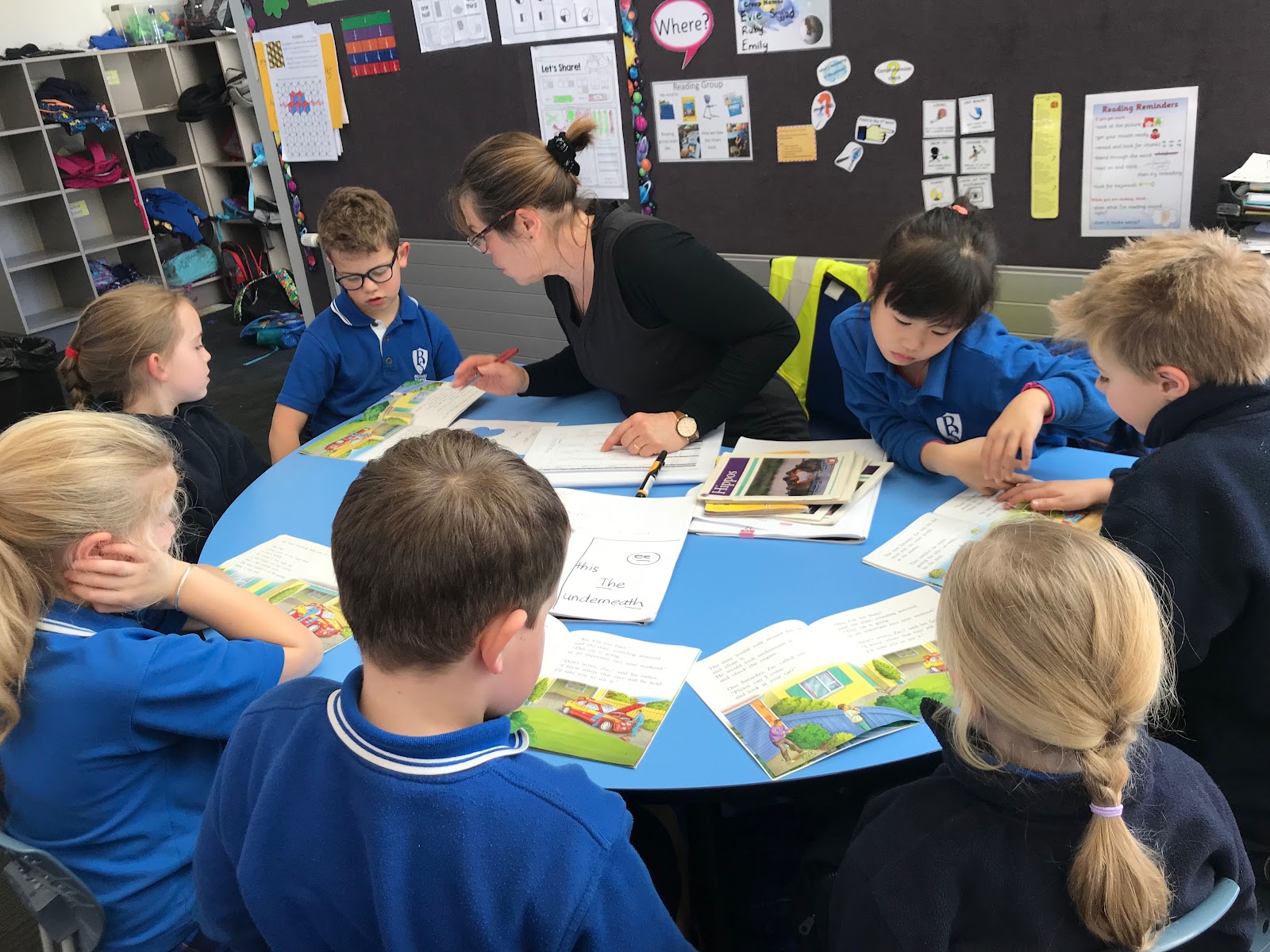
Reading groups observations of New Entrants- 28.6.18


Today I had CRT and as my Teacher as Inquiry this year is on adapting the Reading programme to include Play Based Learning I decided to go and observe the other classes.

New Entrant Classes
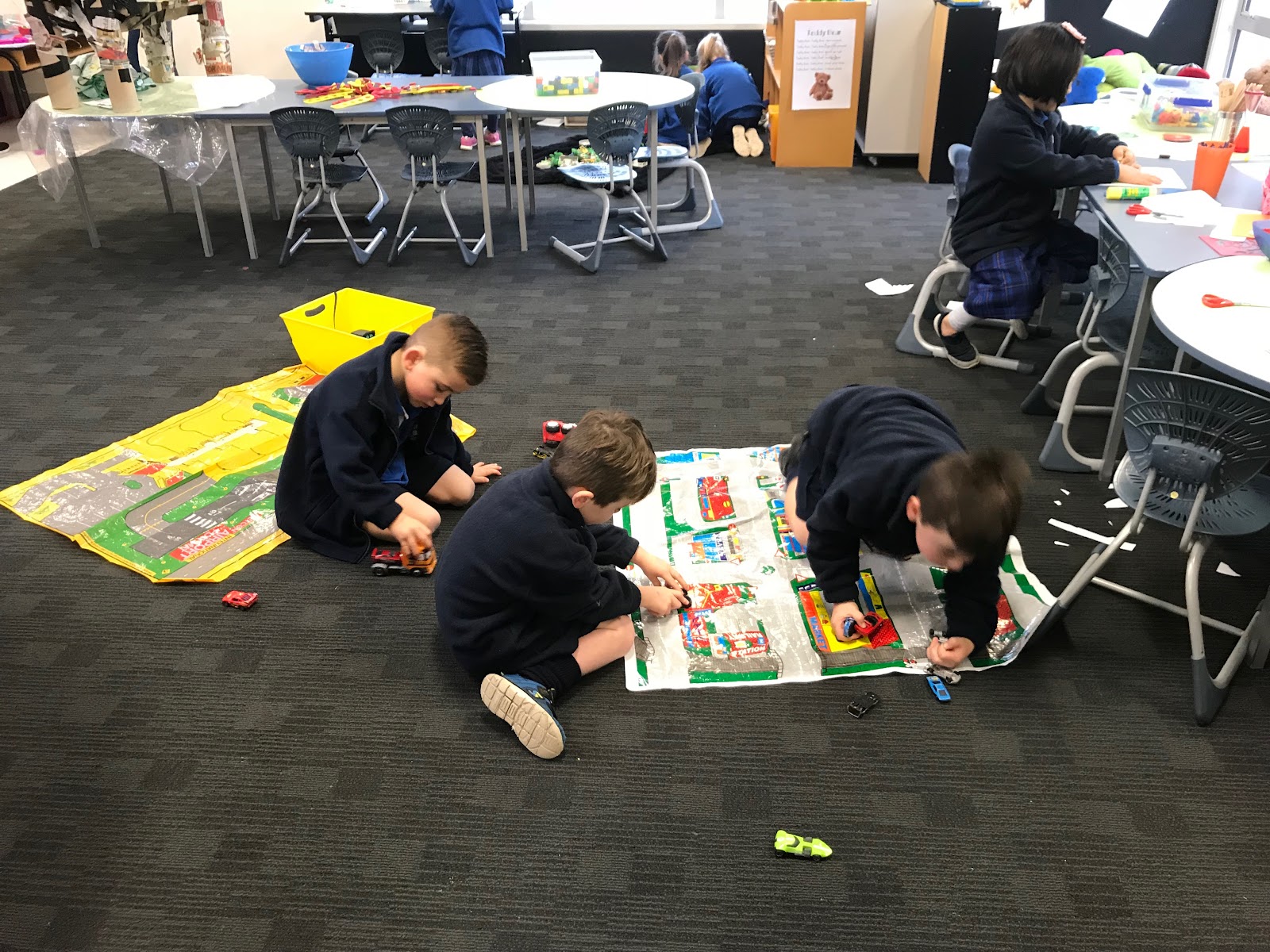
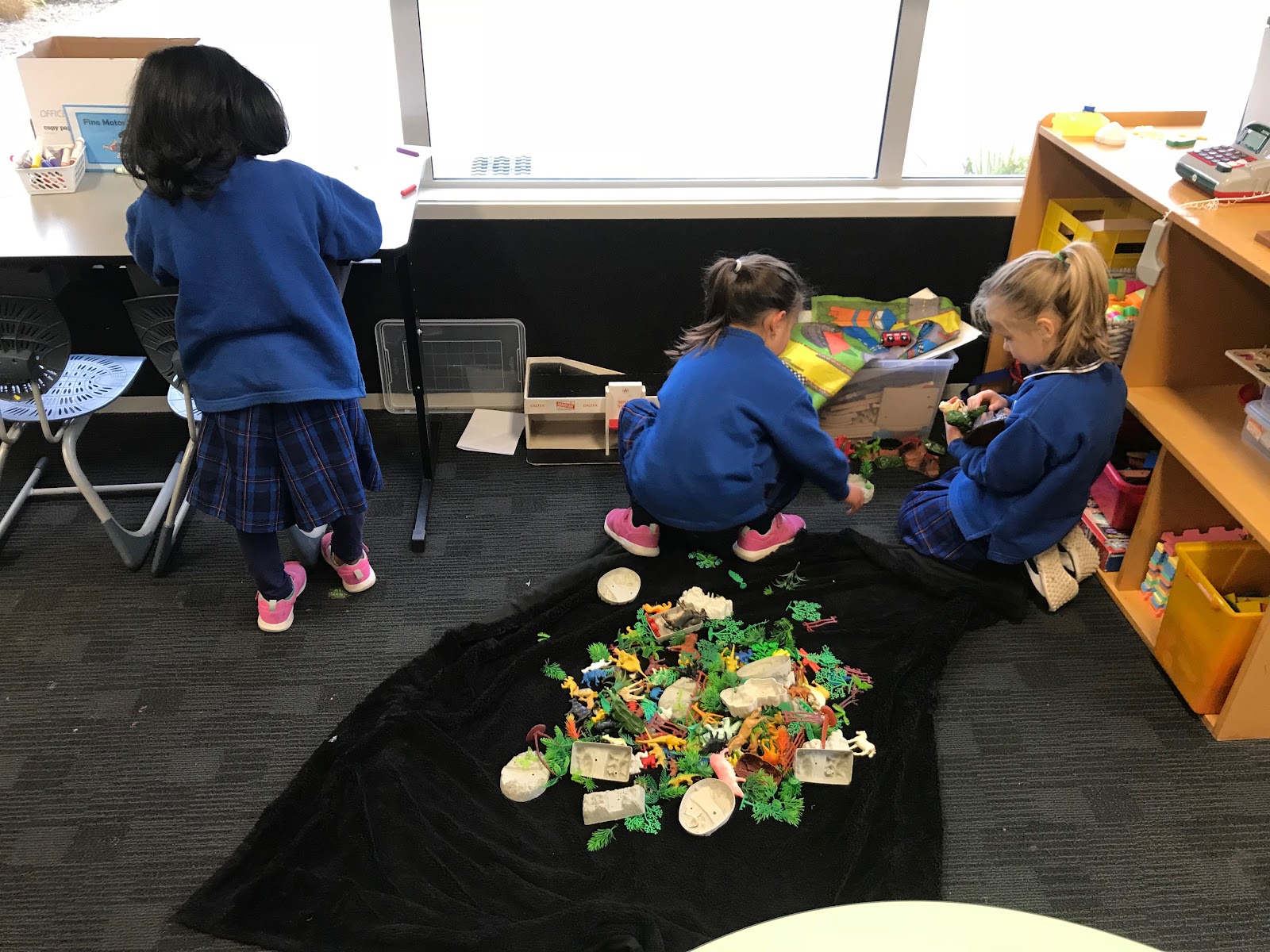
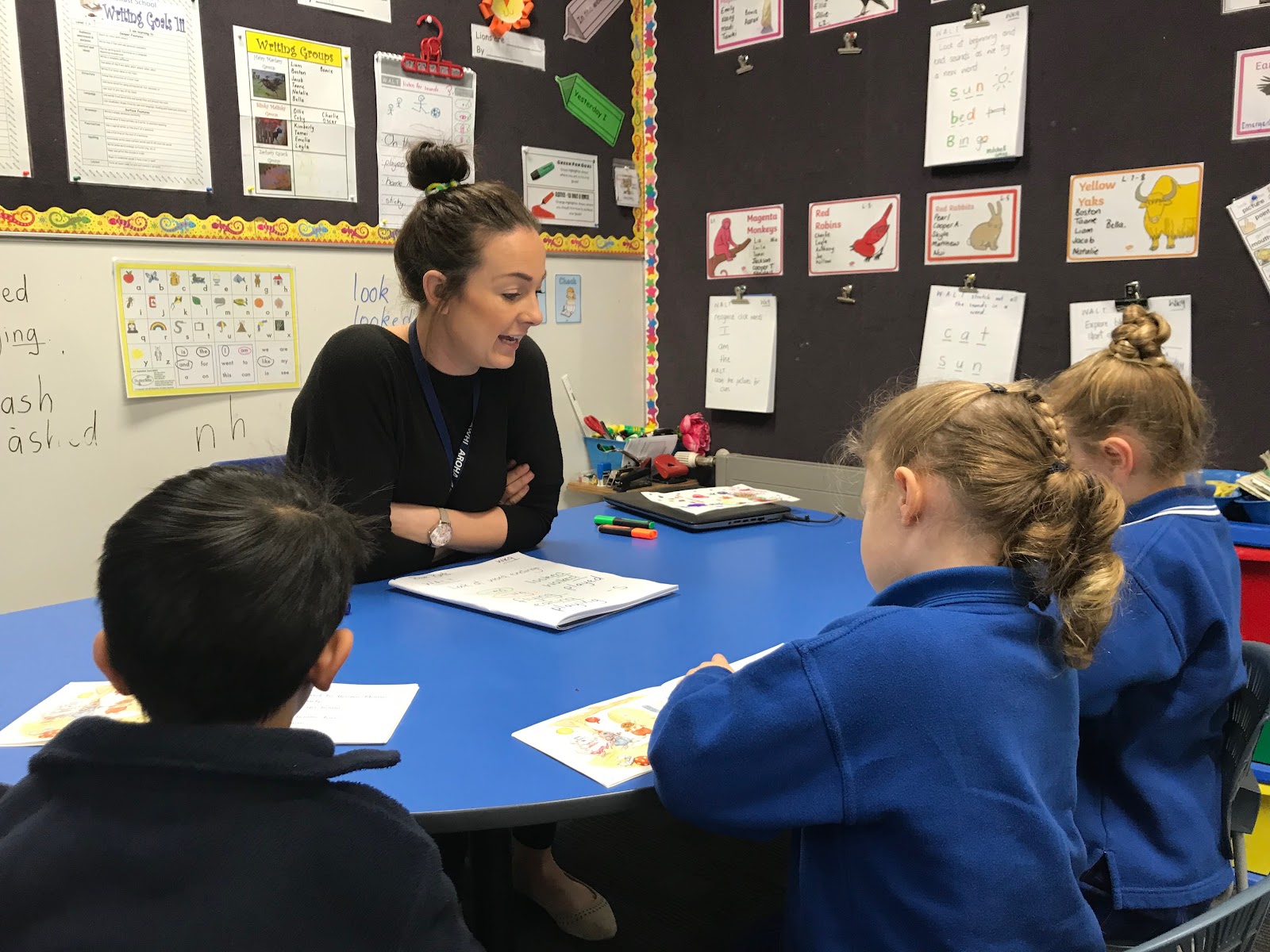
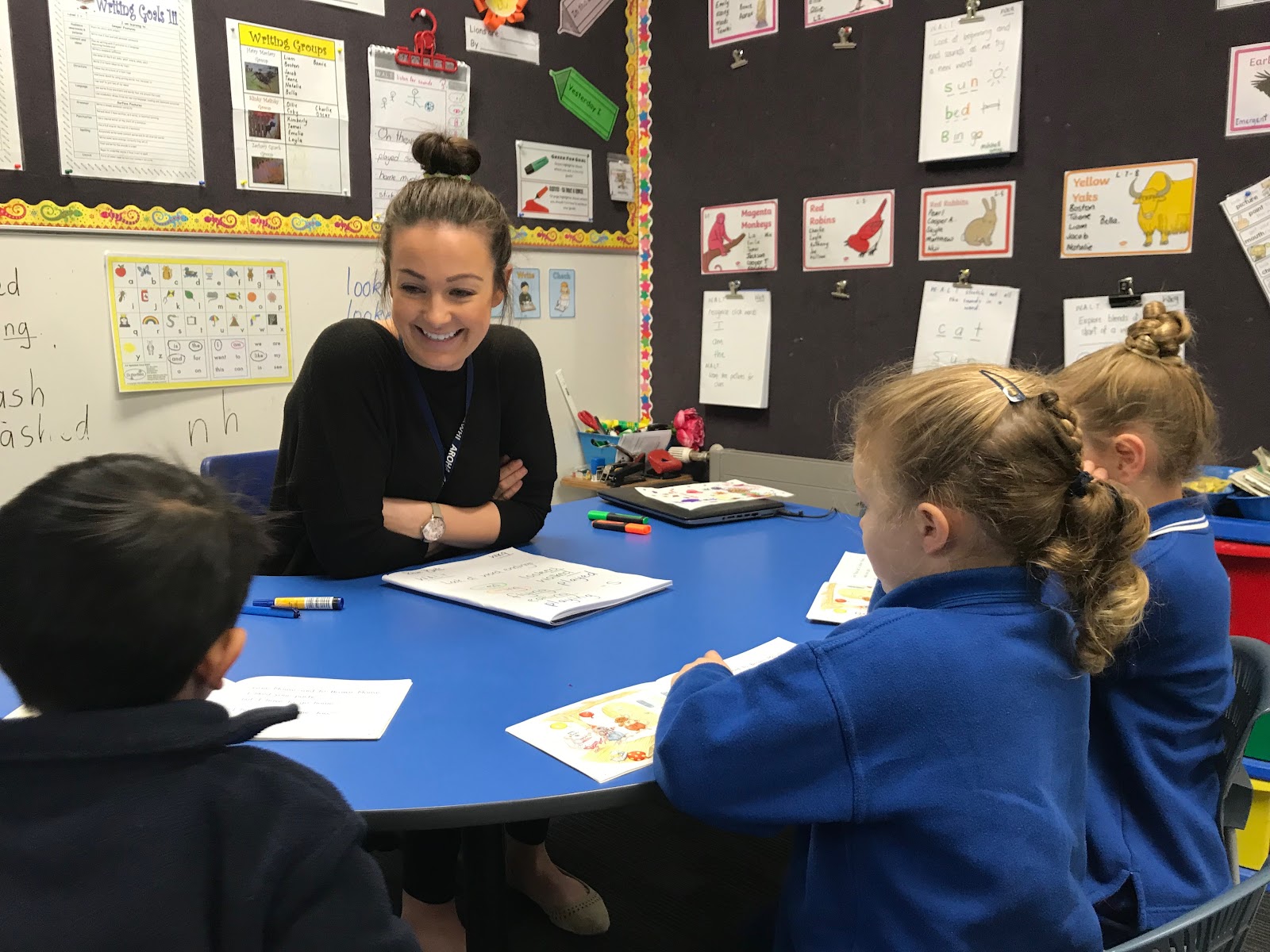
Play based learning stations while two teachers read with reading groups in Room 3. One teacher roving and using social coaching in Rooms 1 and 2.

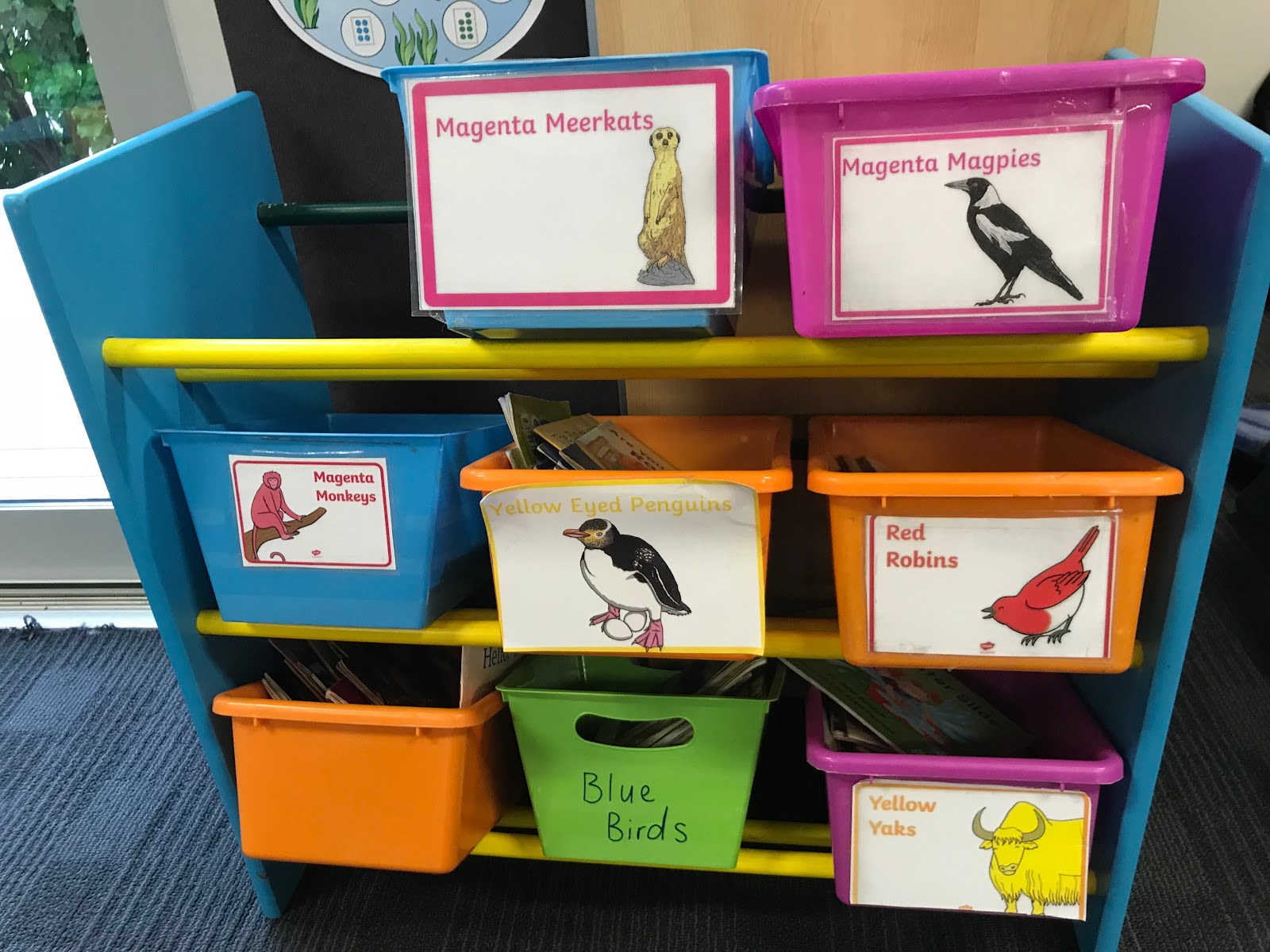
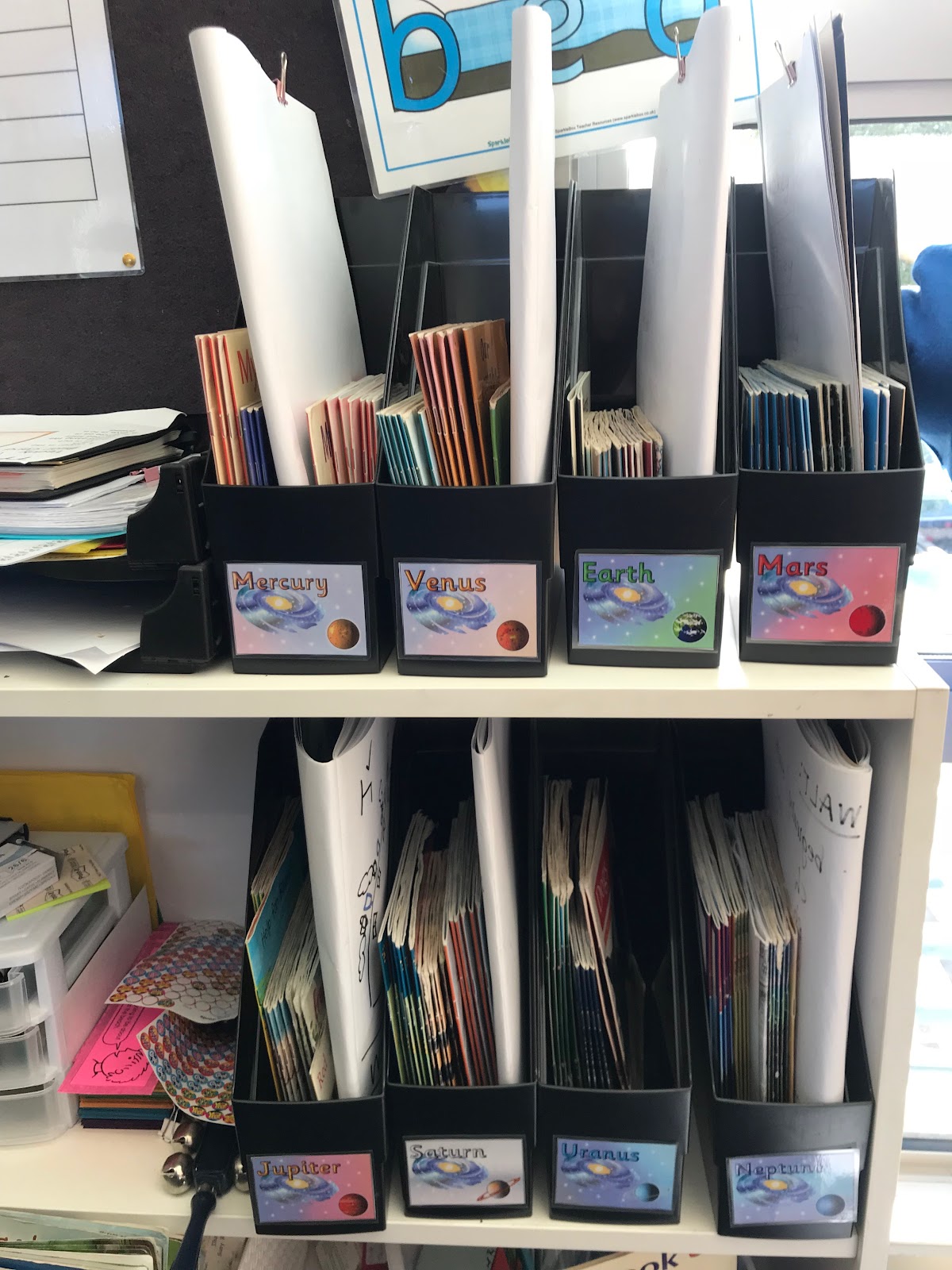
Browsing boxes for each group with previous readers. Read from browsing boxes when waiting for the guided reading session.
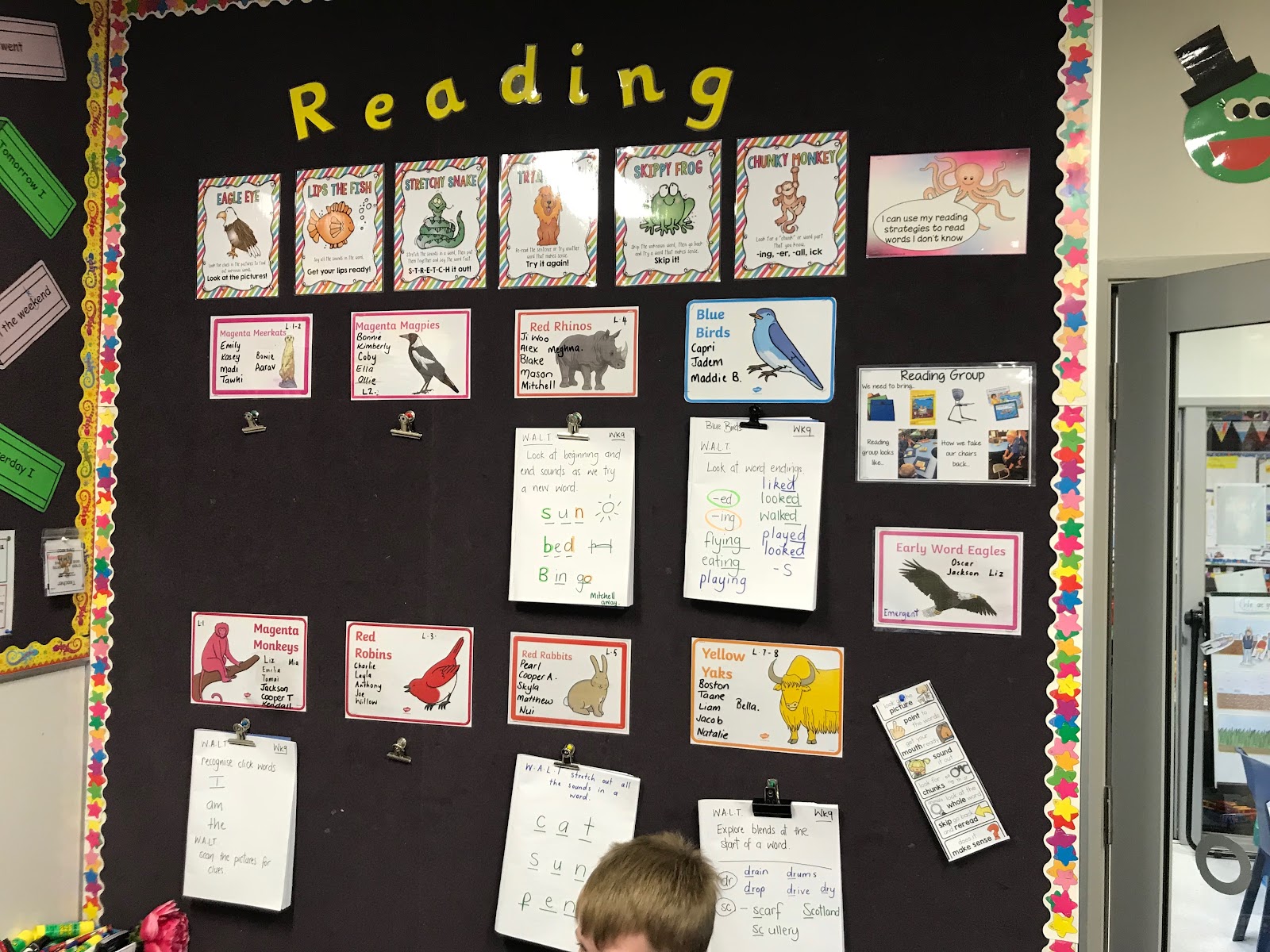
Group 1 observation (red robins)
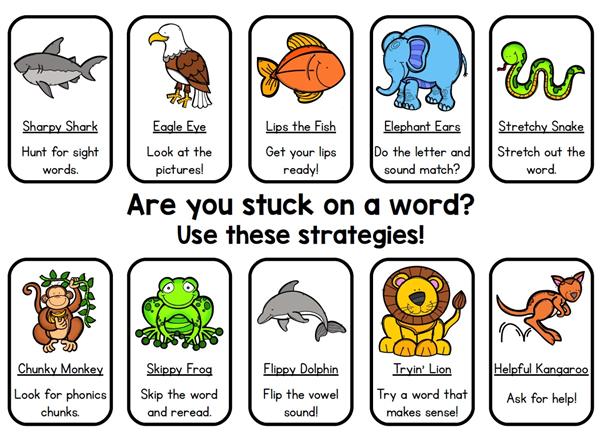
Focus- recap “lips the fish” and what that means, letter sounds
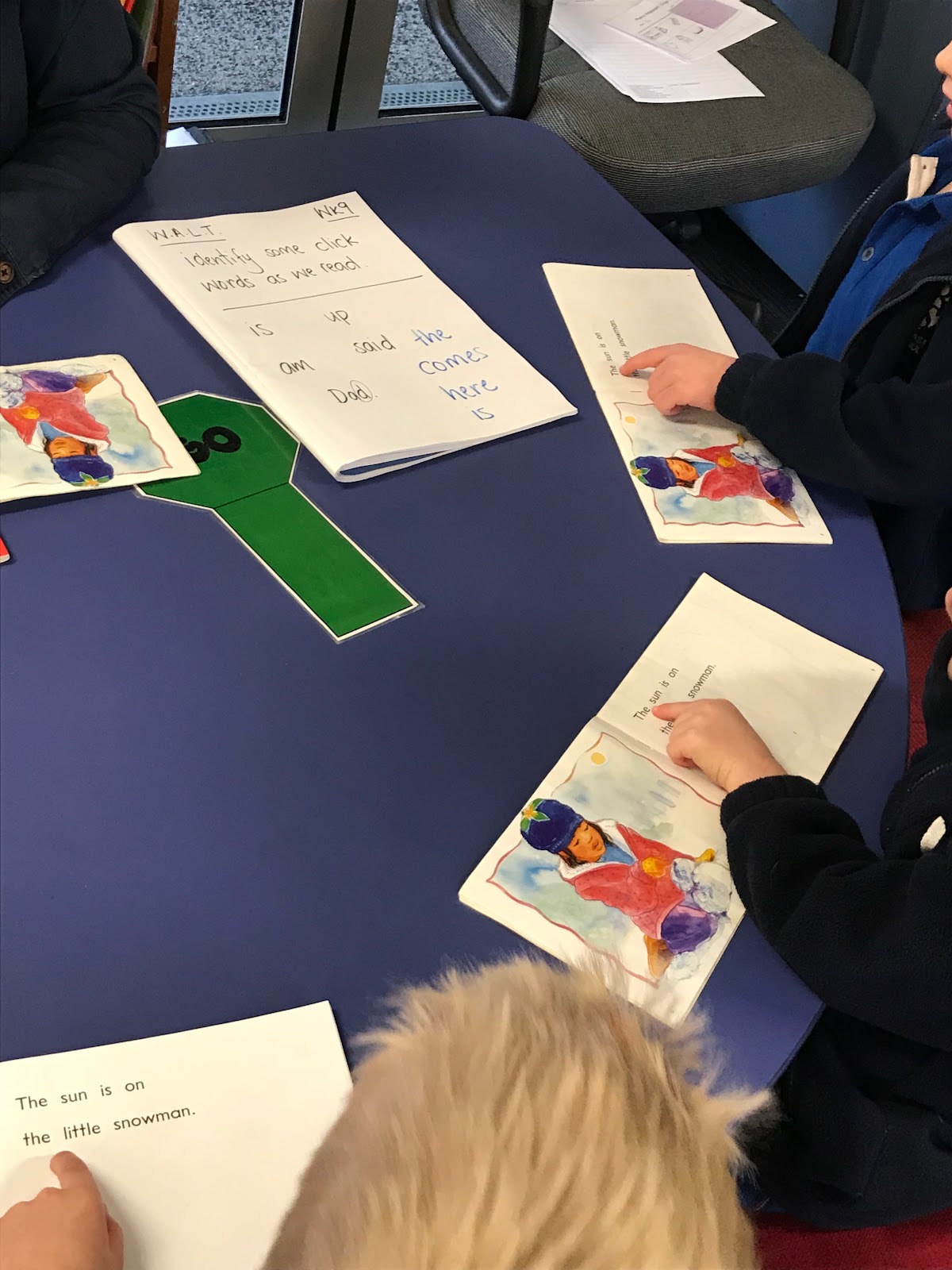
Sally’s snowman (L3)- pre discussion
-show the cover of the book. Why might we choose this book?- Its snowing.
-What season is it?
-What can you make in winter?
-Predict what may happen.
Let’s use our “eagle eyes” and look at the picture-What do you see? How is she feeling?
Finger on the first word. Let’s have a go at reading all by ourselves.
Teacher modelling finger pointing.
Can you find the word “look” because finding our click words is our goal (points to modelling book)
While reading
Where’s the capital letter that goes with that letter (l-L)
Let’s have a prediction... What do you think will happen on the next page?
A tricky word… let’s use “lips the fish” to help us. What’s in the picture that starts with sssss? Let’s try that word to see if it make sense. Tries a few suggestions. Does that sound right? Because it sounds right we better re-read it because we use the “trying lion” and keep on trying.
-look, looking etc

Clipboard for next group sent next door for the third teacher to bring Children through.

Group 2 observation- “Blue birds”  
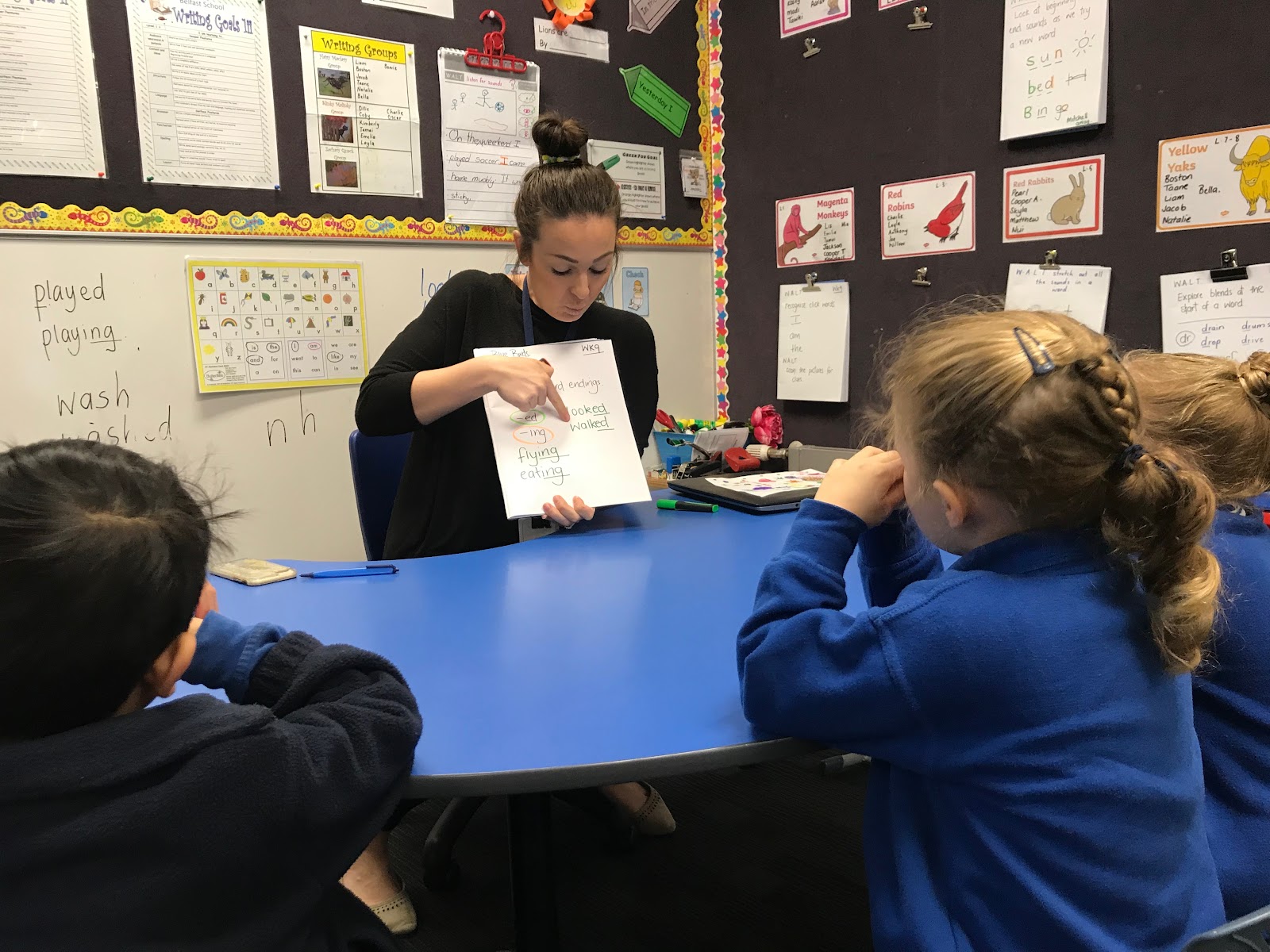
Focus-we have been looking at the word endings. Ed, ing,
Check reading log books.
-use modelling book to go through the focus. Who can tell me the ending in green/yellow etc. what happens to the word play when we add a word ending. Let’s put this word in a sentence.
-re-reading yday book and we are learning to read nice and smoothly.
“Brown mouse plays a trick” level 9.
Let’s start and remember I’m looking for smooth reading, looking at our first word.
Ready, go.
“Liked” save it in your brain and tell me what you saw at the end of the page.
Finger on your nose if you spotted a “ed” word. Added to the modelling book.
Reminded children if they see a word with an ending to save it to the end.
Teacher modelling reading along and pointing when needed.
Put your finger on a word with an “ed” ending. What’s the word?
I want to hear smooth reading. Child 1 will read aloud first. Then child 2 and 3- explained the second two children’s I’ll read in your heads and track with their eyes. Teacher listened to each child and praised their reading.
Recapped prediction from yday.
“Turn the page” let's read this together, ready, go.
What if we changed the word ending in the word looked. Looking- teacher gave sentence examples.
Let’s slow it down and read it together.
Book finished- thumbs up if you agree it was a good trick. Discussion on tricks. Good ending or sad ending to a story.
Books away.


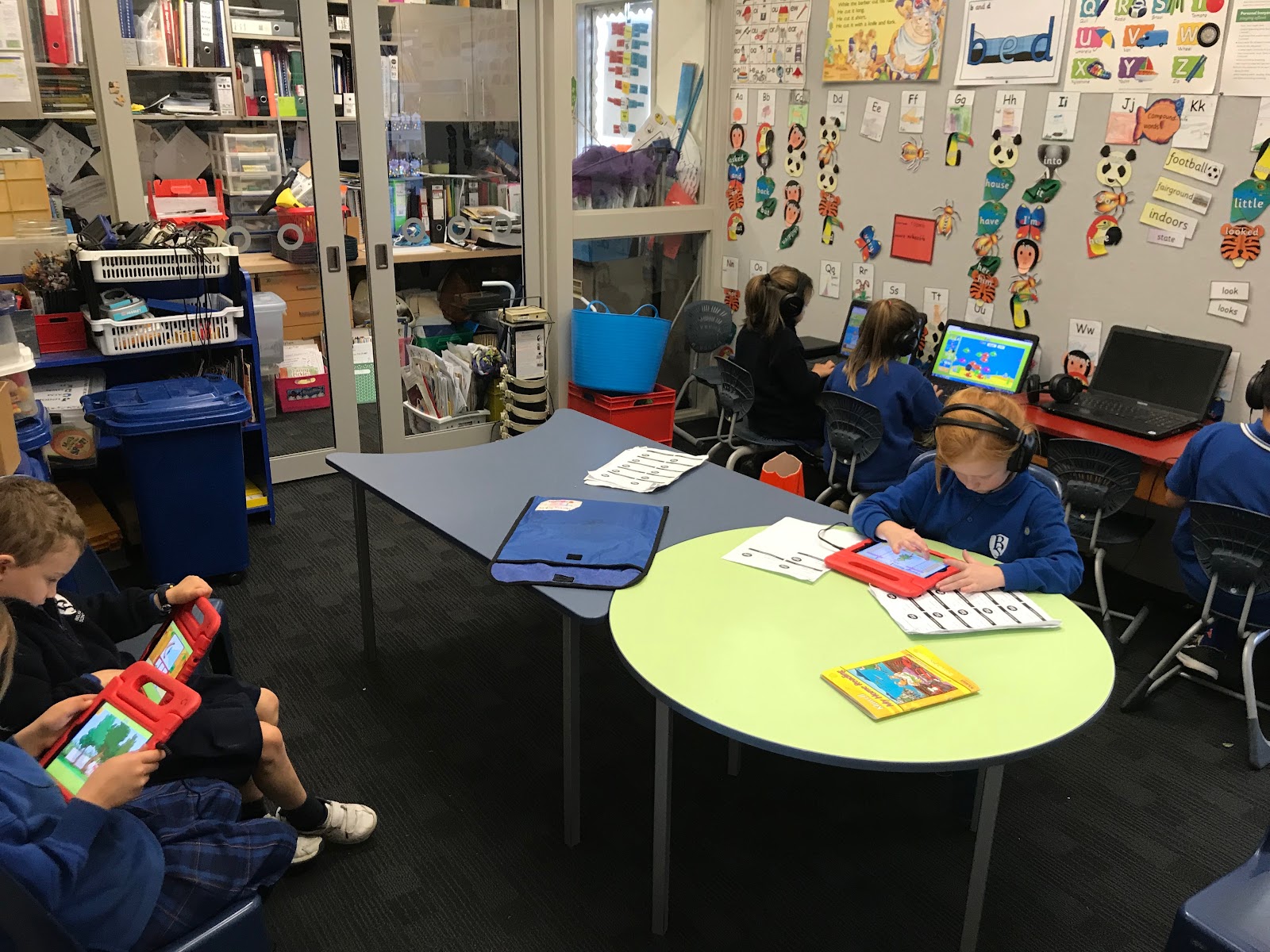
Reading observation Room 6/7
-Blends craft in the main room. Teacher sends children through for the teacher.
-next group on the mat ready to come up to the teacher
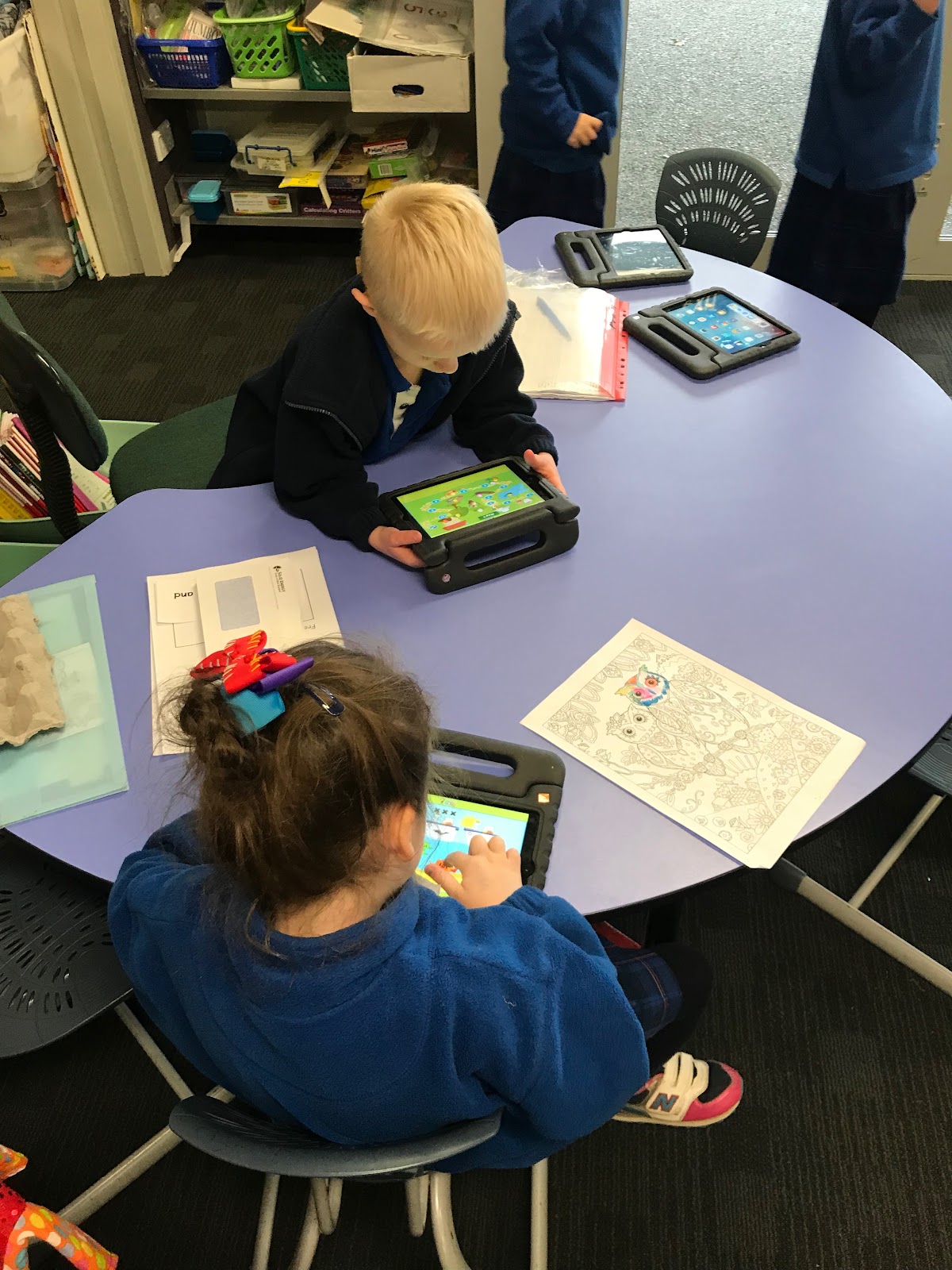
-a group on the iPads in the middle learning space

-roll, checking the whole group is here.
-we are learning to be ready for our reading. Getting out book out, reading folder on the floor and starting to read silently with the old book while waiting.
-shut books, new book
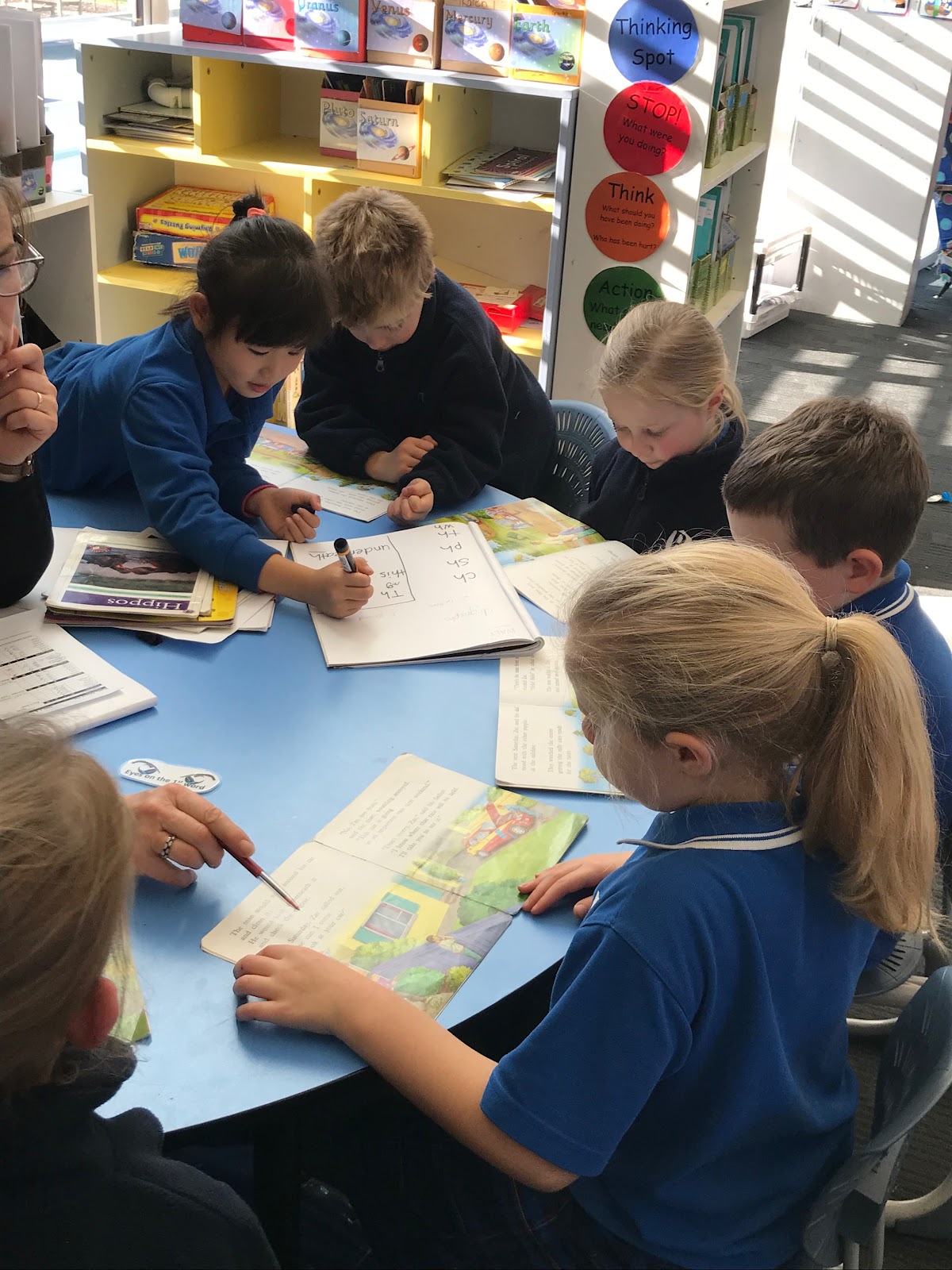
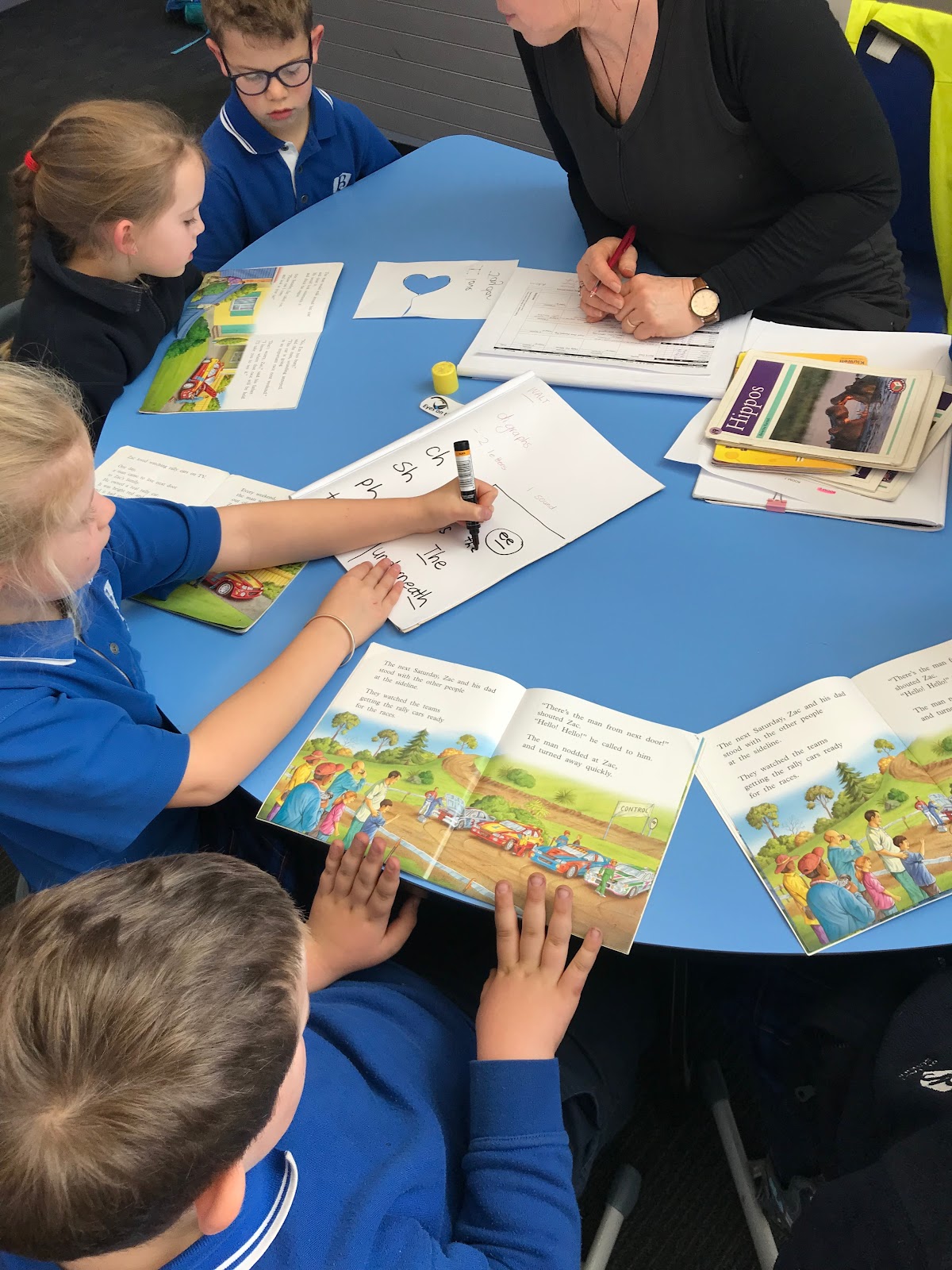
Focus- We are looking at digraphs today
WALT- to find digraph some
What is a digraph- 2 letters, 1 sound
What are some digraphs you know? Ch, sh, ph, th, wh
Record ideas in the modelling book.
”rally car race” level 19.
Discuss the title- what’s a rally? Discuss the meaning.
The main focus is the look for digraphs. “Eyes on the first word” then we are going to “be a detective” and find the digraph.
We are reading together so we may need to read a little slower.
(Picture prompts)
“Be a detective” and find a digraph. Record digraph words in the book.
Now I will read with one person at a time. The rest of you read quietly to yourself and you need to find a digraph then write it in the modelling book. Children recording the words themselves.
Teacher reading 1:1 and making anecdotal notes as they go.


Reflection from observations today:
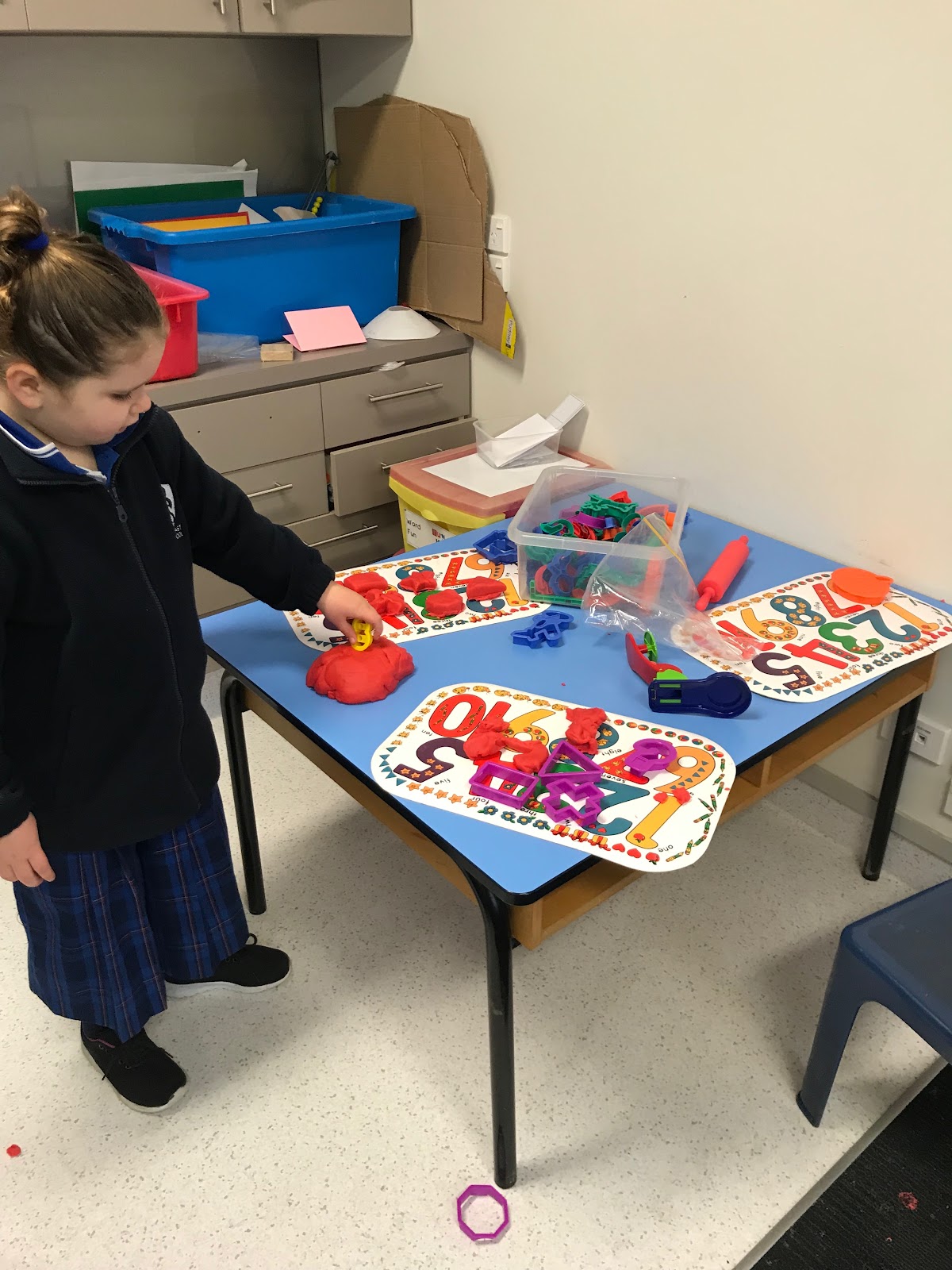
I really enjoyed being able to go into other classes and to observe what they were doing with their play based learning and their reading groups. It has been a long time since I have had time to do this. I found it really valuable. I saw many new ideas for play based learning that I am keen to bring up into out setting.
For example, in the new entrant classes they had an open ended craft activity table. There was a lot of different craft pieces for the kids to use like pipe clears, confetti, sparkles, google eyes, different paper, glue, feathers etc. The children really seemed to enjoy being able to make their own creations and take their creations in any direction they choose.
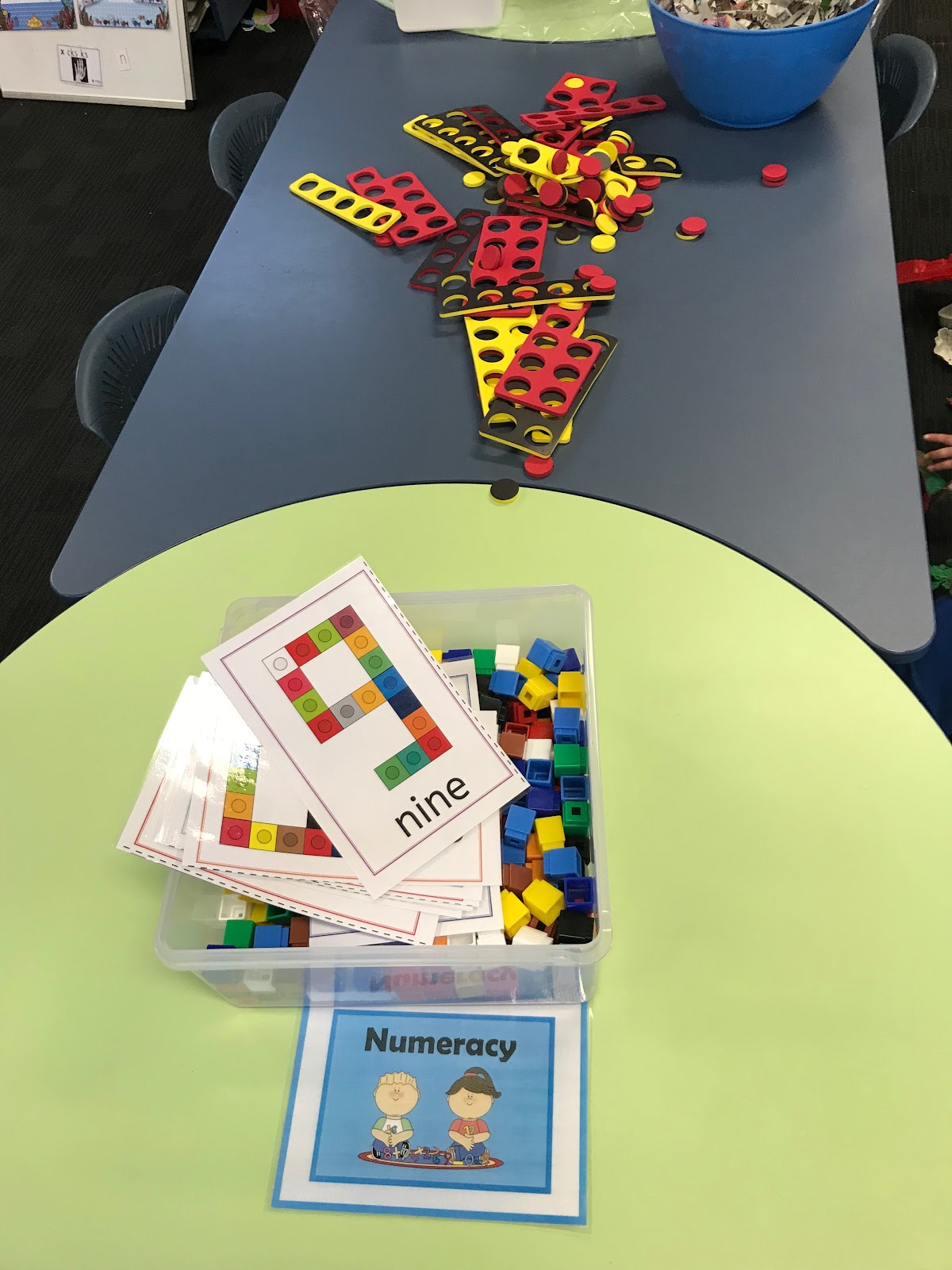
There was a Science table with Inquiry topic activities on for the children to do. I also saw a Numeracy themed table with a range of Maths equipment on that they can use with a range of play type options.
They had a range of building equipment out that the children could use to create things much like what we have in our rooms.

I thought it was great that the NE had musical instruments out for the kids to use and this is something I would love to adapt into our programme as the children love playing with the instruments however in the space we have I am unsure if it would work due to the noise level. This is something I will look into.
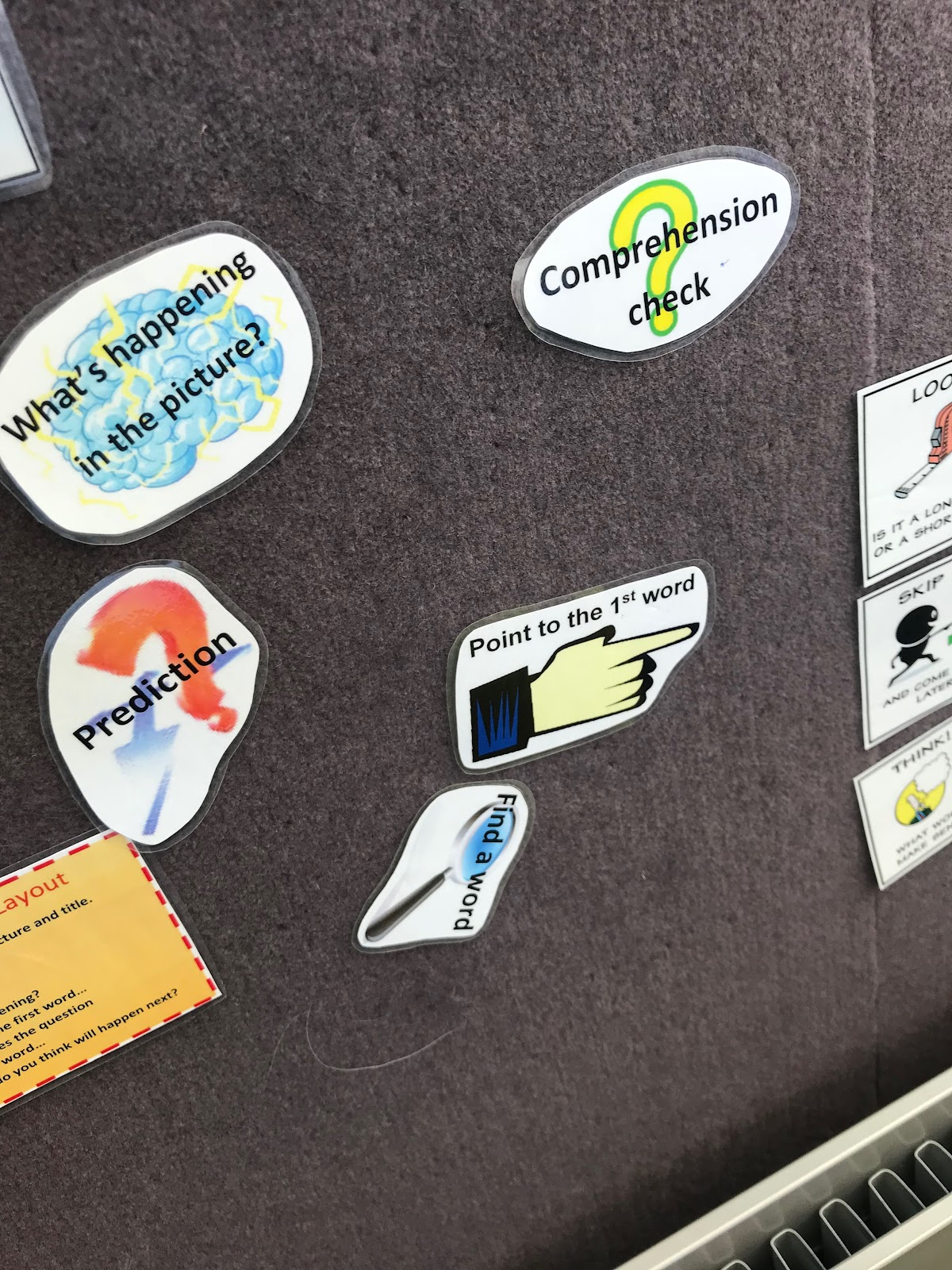
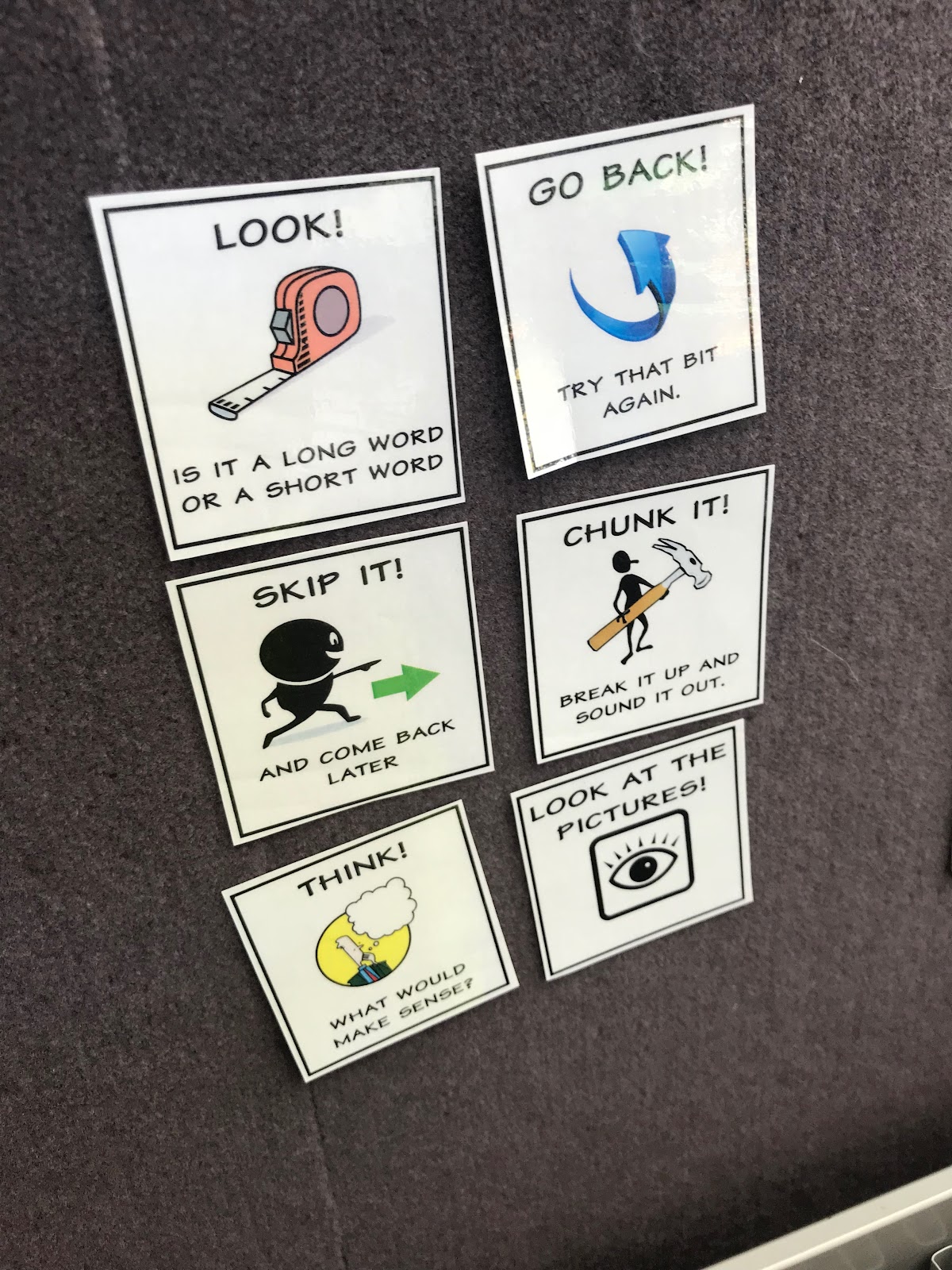
As I was watching the teachers take their guided reading groups I was reminded of some of the reading strategies cards I used to use which I will bring back out to help prompt children to use their reading strategies. There is a great range of reading strategy prompt cards you can use depending on the children's needs so I will make these up.

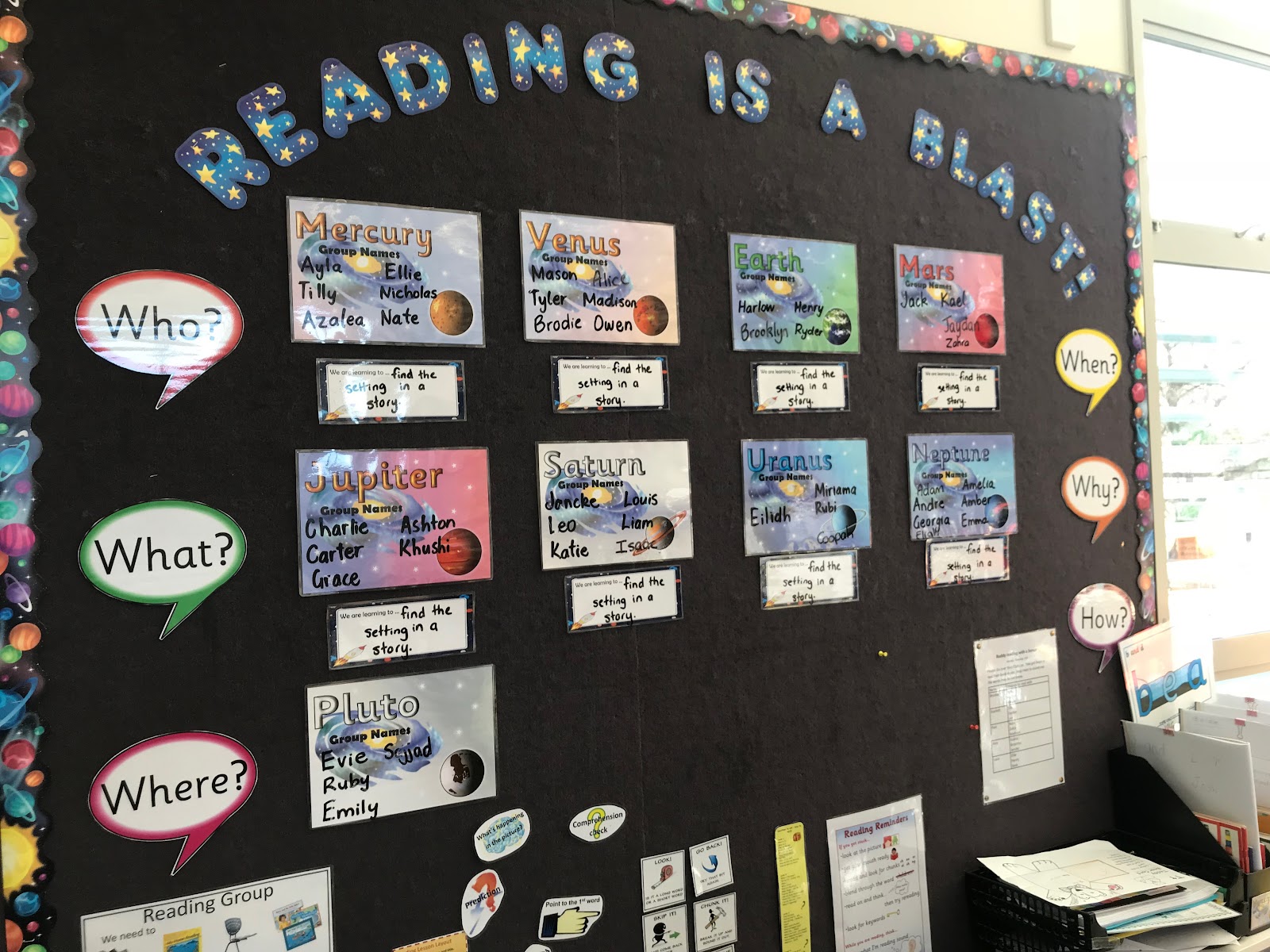
All teachers used modelling books to show and recap learning. I really liked how one of the teachers got the children to record ideas as they found them while reading themselves while she worked 1:1 with the children. The children really took ownership of this and it kept them very focused on their task. This is something I want to adapt into my reading groups with the higher levels.

From a lot of today's observations I have decided what I am doing with Play based learning and reading is going very well and we are well on the way to having a successful play based setting.